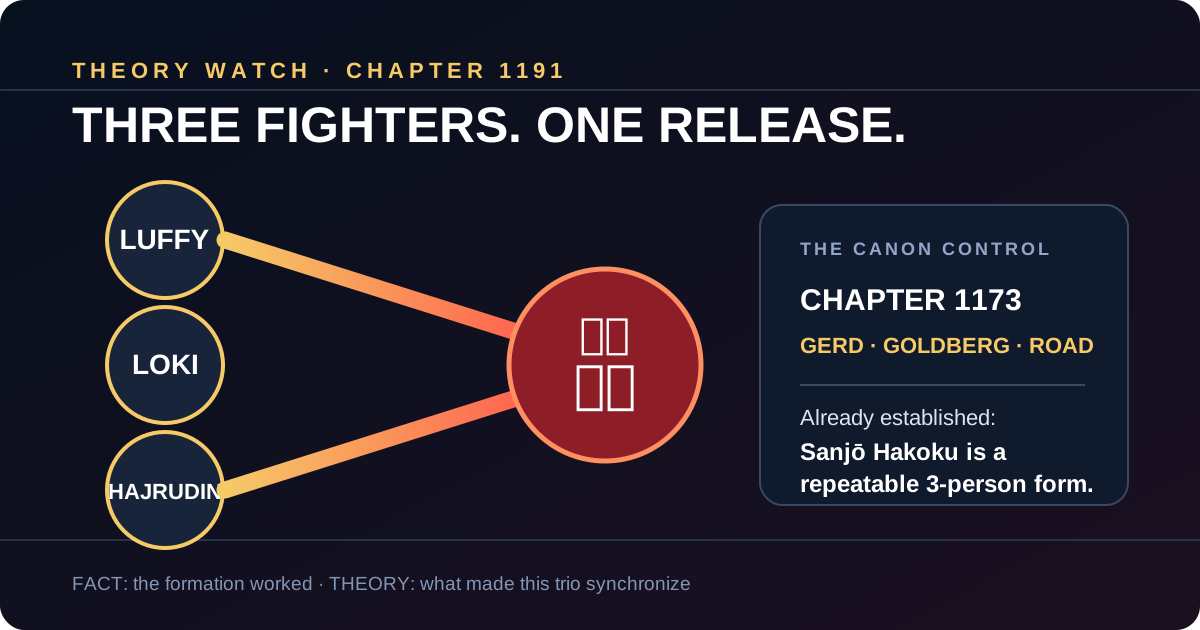
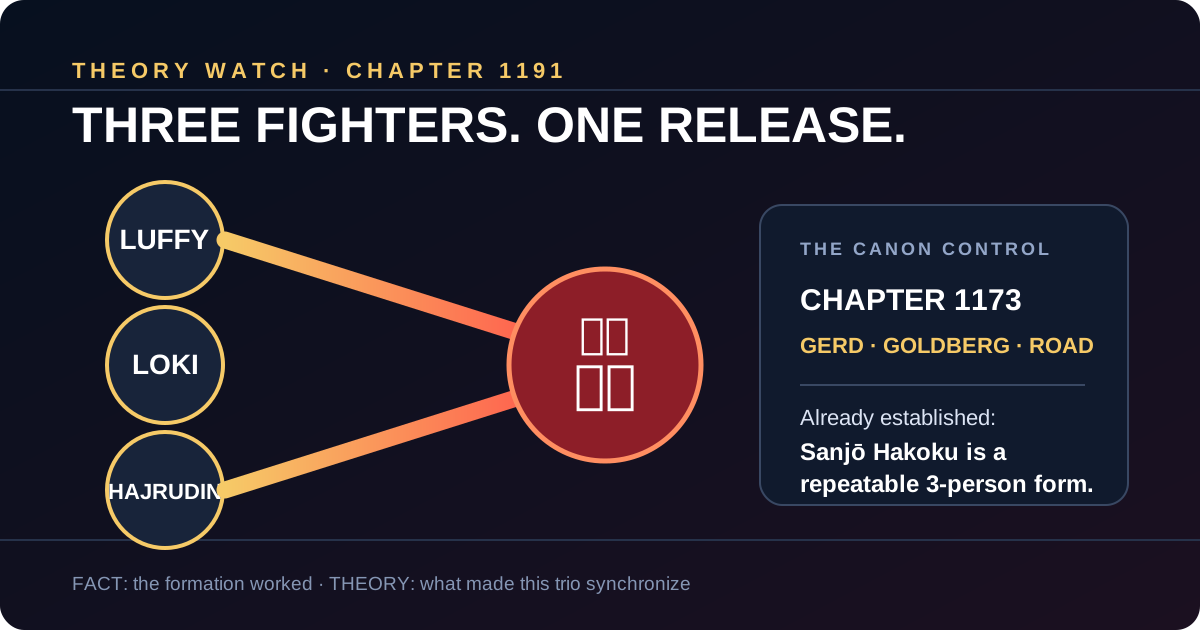
THEORY WATCH — Chapter 1191 ends with Luffy, Loki and Hajrudin firing the same three-person attack together. The result is canon. The reason they can coordinate it so quickly is not.
That distinction matters because one explanation has already started hardening into “fact”: Dorry and Brogy could use Hakoku only because they had fought in sync for a hundred years. The manga has never stated that rule. The pair did duel on Little Garden for a century, but duration and requirement are not the same thing.
Heat / Freshness
MEDIUM–HIGH / HIGH
- Multiple Japanese chapter reviews highlighted the move on release day
- One review made Sanjō Hakoku its headline
- The chapter landed on 24 August 2026
Evidence
6/10
- The 1191 trio and the 1173 precedent are on the page
- No mechanism for synchronisation is stated
- No rule says a century together is required
What chapter 1191 actually shows
The sequence is short. Hajrudin protects Luffy and Gaban, accepts that he may die, and declares that Loki will remain even if he does not. Loki returns, answers his brother, and tells Hajrudin to get into position. Luffy then forces himself back into the fight and joins them. The three release 三将轟国 — Sanjō Hakoku together as the chapter closes.
What we can safely observe is that the setup happens under combat pressure and with very little on-page discussion. We cannot safely say this is the first time Loki and Hajrudin have practised the form, nor that Luffy understands every part of it. The chapter simply does not give us those details.
FACT — on the page
- Gerd, Goldberg and Road use Sanjō Hakoku in chapter 1173
- Loki tells Hajrudin to take position in chapter 1191
- Luffy joins and the three release the attack together
- Dorry and Brogy's Hakoku is the clear two-person ancestor
THEORY — still open
- That all three users need the same technique
- That Haki automatically synchronises the release
- That Luffy copied the form by observation
- That long practice is required — or irrelevant
The control case is chapter 1173
Chapter 1173 prevents the scene from being read as a one-off miracle. Gerd and Goldberg prepare a two-person release; Road joins them, and the three fire Sanjō Hakoku. That earlier use establishes two important limits.
First, Sanjō Hakoku is not a unique technique invented by the 1191 trio. Second, the users do not need to be Dorry and Brogy. It appears to be an Elbaf combat form that can accept three contributors, not a supernatural bond exclusive to one pair.
The older Hakoku remains the obvious ancestor: two giants, one combined release, the force described through the language of a nation. Sanjō adds a third “general” to that structure and changes the name accordingly. The naming tells us about formation. It does not tell us the training requirement.
- Little GardenDorry + Brogy — HakokuTwo giants release a single nation-scale shockwave. This is the visual and naming ancestor.
- Chapter 1173Gerd + Goldberg + Road — Sanjō HakokuA different generation establishes that the idea can be performed by three people.
- Chapter 1191Luffy + Loki + Hajrudin — Sanjō HakokuLoki calls the setup, Luffy joins, and the chapter closes on the combined release.
Three explanations that fit the page
The strongest explanation is also the least exotic: Loki called a known formation, Hajrudin knew what the call meant, and Luffy matched the release. Chapter 1173 shows that at least three members of the New Giant Warrior Pirates already understand the form. Hajrudin is their captain and Loki is an Elbaf prince. Familiarity on their side requires little invention.
Luffy is the harder part. One possibility is that the attack only demands three fighters aim and release power at the same instant. If so, Loki's instruction to take position is enough. Luffy has spent the series reading other fighters in motion and joining combination attacks without a rehearsal montage.
A second possibility is that the shared ingredient is intent, not identical technique. The 1191 sequence resolves the brothers' relationship immediately before the attack: Hajrudin stakes Elbaf's future on Loki, and Loki answers him as a brother. Luffy enters an alignment that is already emotionally and physically clear. This is an observation about how the scene is built, not a stated power-system rule.
A third possibility is Haki. Three very powerful combatants producing one coherent strike naturally invites that reading, but chapter 1191 does not explain the release in Haki terms. Until the manga names that mechanism, Haki is a plausible tool, not the answer.
What the “hundred years” claim gets wrong
Dorry and Brogy's century-long duel proves endurance, rivalry and an extraordinary shared history. It does not establish a minimum practice period for Hakoku. Chapter 1173 is the clearest rebuttal to treating that assumption as canon: a younger trio performs the descendant form without the story attaching a hundred-year condition to it.
The careful version is therefore simple. Long familiarity may make a combined attack easier. The manga has not said it is necessary. And chapter 1191 may be designed to show the opposite — that three people with enough power, a known setup and perfectly aligned purpose can create the same effect in one decisive moment.
That is why this theory scores 6/10 for evidence. The chapter supports a formation-and-timing explanation, and 1173 supports repeatability. It does not yet choose among technique, intent, Haki or imitation.
For the wider set of live chapter 1191 theories, see our Japanese ONE PIECE Theory Radar. The other half of this chapter — the markings on Im's transformed body, and who might have issued them — is in Who Is Imu Contracted To?. This one belongs on the board because its most repeated premise becomes weaker, not stronger, when checked against the earlier chapter.
Our call
Sanjō Hakoku did not require the story to invent a century of instant chemistry. It required three positions, three releases and one shared target. Chapter 1173 had already taught us that much.
What chapter 1191 adds is the emotionally charged lineup: an Elbaf captain, the brother he has finally trusted, and the outsider who can turn a combat rhythm into his own. Until Oda explains the mechanics, that is the strongest reading — and it stays a theory.
For where those three fighters sit individually — and why the attack matters more than any of their solo results against Im — see our ranking of the strongest Elbaf characters.