On 23 August, at ONE PIECE DAY '26 in Makuhari, Shueisha announced the final result of the second ONE PIECE character world popularity poll. Monkey D. Luffy won with 2,378,519 points, ahead of Zoro on 2,148,793 and Sanji on 1,399,204. Around 1,560 characters were eligible and roughly 13.08 million points were cast.
That is the number everyone will quote. It is also the least interesting thing the poll produced.
A note on scope: this article tracks the weekly regional snapshots published during voting. The official site also published separate final regional rankings, which we cover in Luffy finished first in three of eight regions.
For three months, every Monday at midnight JST, the official account published a regional top five — Japan, Asia, Oceania, North America, Latin America, Europe, the Middle East, Africa. Those weekly snapshots were reported in Japan while the vote was running, and then dropped out of the conversation once the final tally arrived. Read in sequence, they describe an election that looked completely different depending on when and where you were standing.
Final result — announced 23 August 2026
Luffy
- 1. Luffy — 2,378,519 pt
- 2. Zoro — 2,148,793 pt
- 3. Sanji — 1,399,204 pt
- 4. Nami — 1,007,955 pt
- 5. Law — 732,301 pt
What the weekly data showed
Zoro
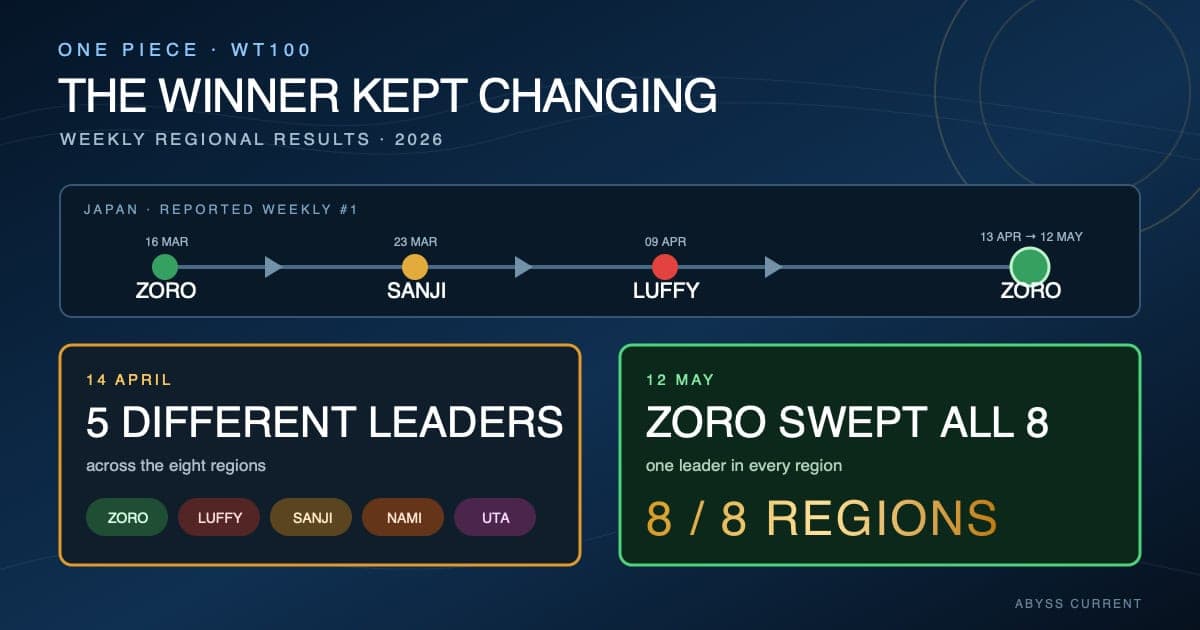
- Led every one of the eight regions on 12 May
- Led Japan in six of the seven reported weeks
- Still finished second overall
- The weekly and final counts are not the same population
Japan could not decide
Start with the market closest to the source.
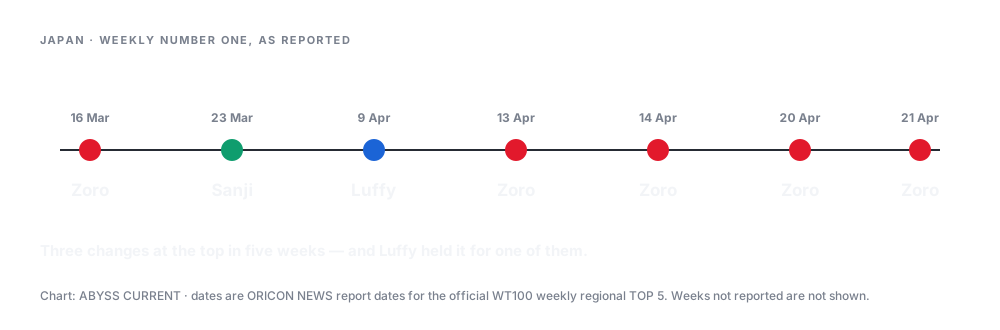
Zoro on 16 March. Sanji the following Monday. Luffy in early April. Zoro again by mid-April, and Zoro for every reported week after that. Three changes at the top in five weeks, in a poll whose eventual winner was none of the characters leading it for most of that stretch.
The 16 March week is the one Japanese media noticed at the time, because Japan was the outlier: Zoro led at home while every other region had Luffy first. That single week is where the "Japan votes differently" story comes from — and it is worth being precise that this was one week of interim data, not a final regional result.
The week the map fell apart
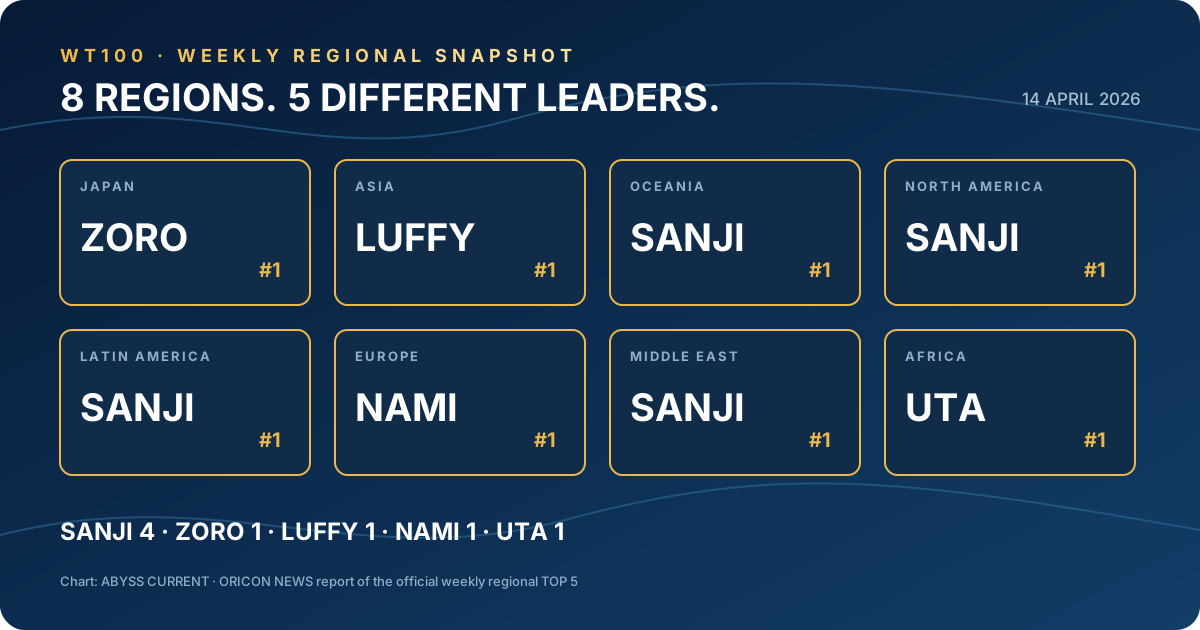
On 14 April, one report carried all eight regions at once. It is the only week in this dataset where that happened, and it is the most revealing.
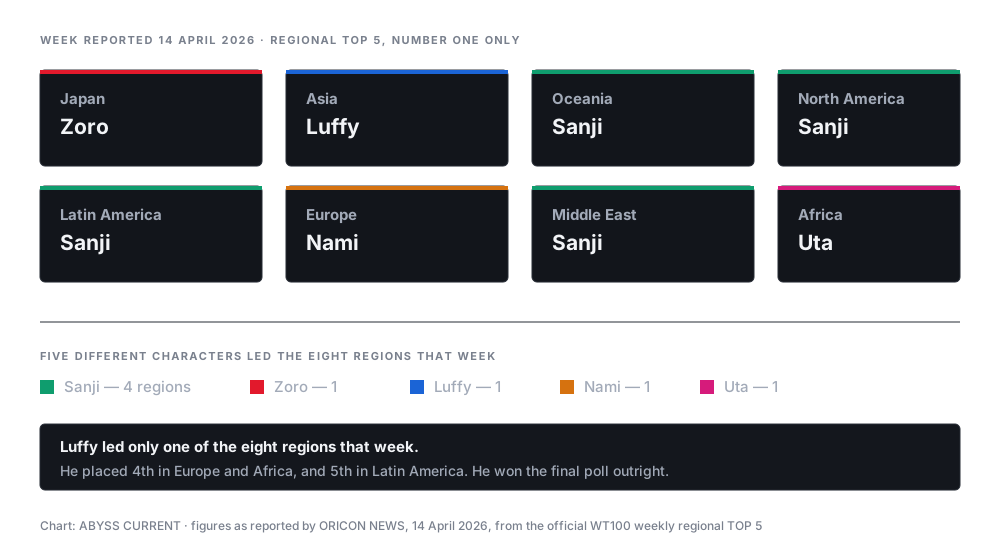
Five different characters led eight regions. Sanji took four of them. Nami led Europe. Uta — the film character, not a crew member — led Africa outright, with Luffy fourth. In Latin America Luffy was fifth.
The Africa result was strange enough that it became its own story in Japan. Readers reacted with straightforward bewilderment: "Uta at number one in Africa, that's wild — wait, really?", "Uta's surge in Africa is unbelievable", "what is going on in Africa all of a sudden." It was not a rounding artefact either; Uta also placed fourth in Latin America and fifth in the Middle East the same week.
Then it snapped shut
Four weeks later, on 12 May, the pattern inverted completely.
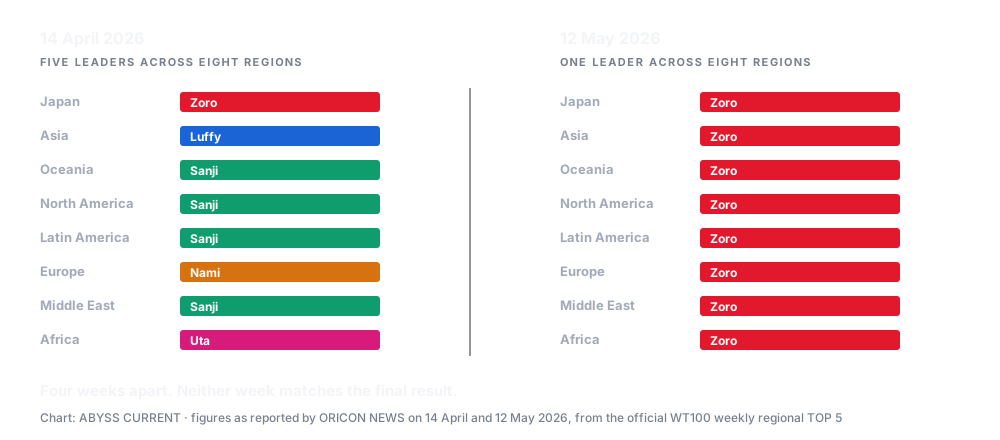
Zoro led all eight regions. Japan, Asia, Oceania, North America, Latin America, Europe, the Middle East, Africa — every one. The same report notes that the interim overall ranking published shortly before had Luffy first and Zoro second, so even in the week Zoro swept the regional boards he was not leading the poll he was about to lose by 230,000 points.
Why the weekly boards are their own thing
This is the part that matters, and it is why the weekly data cannot simply be read as an early version of the final regional tables.
The weekly snapshots are not the final regional rankings. The official campaign site publishes both: a global top 100 and a separate final ranking for each of the eight regions. This article is about the first set — the weekly boards published while voting was still open — and those are a different measurement from the final regional tables, taken at a different time and, as below, from a different pool of votes.
The weekly and final numbers are not counting the same thing. The official note on the interim rankings is explicit: interim standings are based on web voting — the campaign site and the ONE PIECE BASE app — plus WT100 spot voting. Postcard votes are counted only in the final result. Voting ran from 4 March to 11 June, with postcards valid if postmarked by the closing day. So an unknown quantity of votes never appeared in any weekly chart at all.
Weekly regional snapshots
MOVING
- Published during voting, week by week
- Web, ONE PIECE BASE and spot votes
- Incomplete regional coverage in most weeks
Final regional rankings
FINAL
- Published after voting closed
- Includes postcard votes absent from interim charts
- A separate result, not the last weekly snapshot
The counts were being corrected as they went. From April, the weekly rankings carried the line "this ranking is based on results screened for fraudulent votes." The number of eligible characters also moved during the campaign, from 1,560 in the 16 March report to 1,567 a week later.
And the reporting is incomplete. Most weeks only Japan and one or two other regions were covered. We have seven weeks for Japan and one complete eight-region snapshot. That is enough to show the vote moved. It is not enough to reconstruct a season, and it is not a substitute for the official final regional tables.
What the weekly data is actually good for
Not for deciding who was really most popular where — the official final regional rankings answer that, and this data cannot. What it shows is something no final table can: that a global fan vote is not one stable preference being measured once, but a moving thing that reshuffles week to week while it is being counted.
Luffy won. He also spent a chunk of April behind Sanji in four regions, behind Nami in Europe, and behind Uta, Sanji and Nami in Africa. Both of those are true, and only one of them is a result.